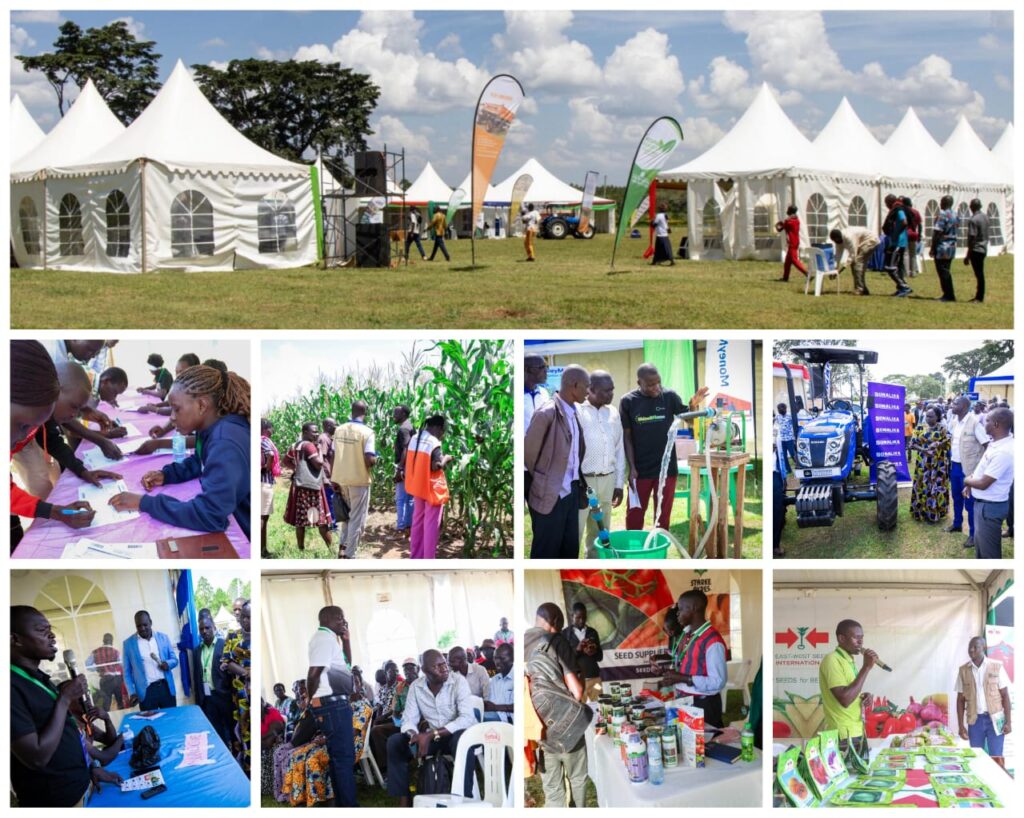
The two-day EAGC Northern Uganda Agribusiness Expo hosted by Ngetta ZARDI, Lira City successfully brought together farmers, agribusiness stakeholders, researchers, development partners, and agricultural innovators to promote knowledge sharing, technology adoption, and sustainable agricultural growth under the theme, “Promoting resilient food systems for improved hold incomes and food security”.
🔹 The expo hosted over 32 exhibitors, including agro-input companies, agro machinery suppliers, irrigation service providers, research institutions, Lira city supported SMEs, and technology innovators showcasing solutions aimed at improving agricultural productivity, climate adaptation and wealth creation.
🔹 More than 2,600 farmers attended the expo over the two days, with over 1,500 farmers participating on Day One and more than 1,100 farmers attending on Day Two.
🔹 The event featured a Farmer Field Day, solar powered irrigation crop demonstrations where over 400 farmers were profiled under the Danida Green Business Partnership (DGBP) Project for uptake of ready to go irrigation kits under a financing scheme with popular commercial banks. The crop demonstrations also provided a platform for practical learning and engagement with improved farming practices.
🔹 The expo attracted prominent leaders and stakeholders, including the Mayor of Lira City, who officially opened the event, as well as researchers from Ngetta ZARDI and other partner institutions who shared valuable insights on agriculural development.
🔹 Through the dedicated Training Hub, over 1,500 farmers received hands-on training on climate change adaptation, climate-smart agriculture, irrigation technologies, and the use of data-driven farming solutions to enhance productivity and resilience.
🔹 Farmers had the opportunity to interact directly with exhibitors, explore demonstration plots, learn about modern farming technologies, and build connections that can support increased productivity and market access.
The Northern Uganda Agribusiness Expo continues to strengthen collaboration across the agricultural value chain, connecting farmers with innovations, knowledge, and partnerships that are critical for transforming agriculture and improving livelihoods across the region.